
A road accident, a workplace fall or even a sports injury can change your financial routine overnight. In India, accidental injuries are more common than most professionals assume. According to the Ministry of Road Transport and Highways, India reported more than 4.6 lakh road accidents in a recent year , with lakhs of individuals suffering injuries that temporarily affected their ability to work.
For salaried professionals, an accident can quickly exhaust available sick leave, leading to unpaid time away from work. For consultants, freelancers, and business owners, the financial impact is often even greater, as income generation may stop immediately when they are unable to work. While earnings are interrupted, regular expenses such as EMIs, household costs, insurance premiums, and other financial commitments continue, creating significant pressure on personal finances during the recovery period.
This is where Temporary Total Disablement becomes financially relevant.
What Is Temporary Total Disablement (TTD)?
Temporary Total Disablement meaning refers to a situation where an insured person becomes temporarily unable to perform their job due to an accident but is expected to recover over time.
Unlike permanent disability, TTD in insurance focuses on income interruption during recovery.
For example, a salaried employee recovering from a fracture or a self-employed professional unable to work after an injury may temporarily lose earning ability during recovery. The financial impact becomes even more relevant when viewed against India’s accident demographics. According to the MoRTH 2022 report, people in the age group of 18–45 years accounted for 66.5% of road accident victims, highlighting how accidents disproportionately affect individuals in their primary earning years.
In each case, recovery is expected, but the immediate challenge is loss of income during the recovery period.
This is where personal accident cover becomes relevant. Some personal accident policies offer weekly compensation benefits during Temporary Total Disablement. However, payout structure, duration, and eligibility conditions can vary significantly across insurers and policy types in India.
Why TTD Matters More Than Most People Think
Most professionals plan for hospital expenses, but the bigger risk after an accident is loss of regular cash flow.
In India, a few realities make this critical:
- EMIs and fixed expenses continue regardless of recovery
- Self-employed professionals often have no paid leave
- Recovery periods can extend for several weeks or months
- Physiotherapy in metro cities can cost ₹800 to ₹2,500 per session
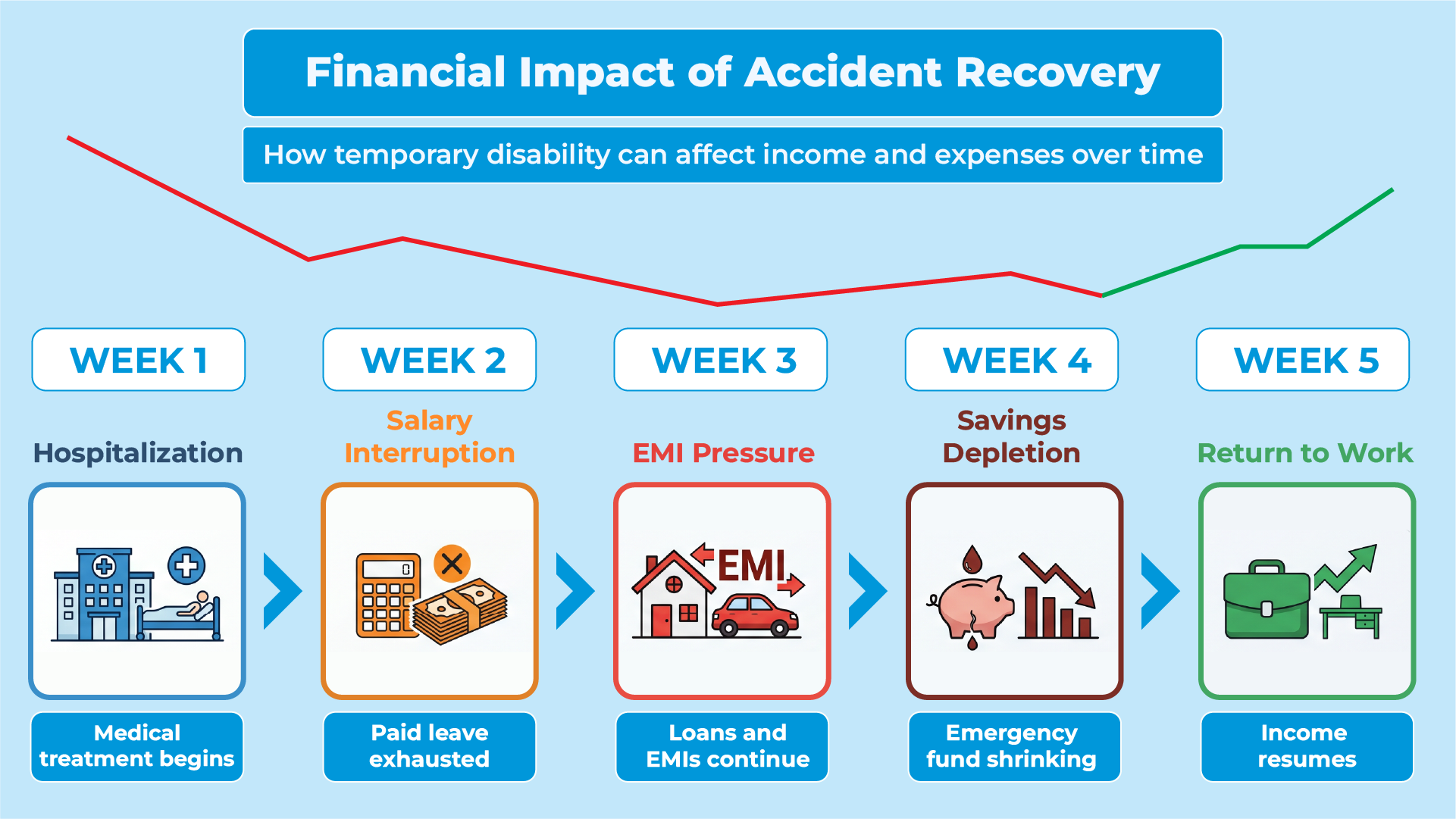
Industry estimates show that indirect recovery costs and income loss can significantly increase the overall financial burden after accidental injuries, especially in urban areas.
This is why temporary disability insurance is increasingly seen as a necessary complement to health insurance, not an optional add-on.
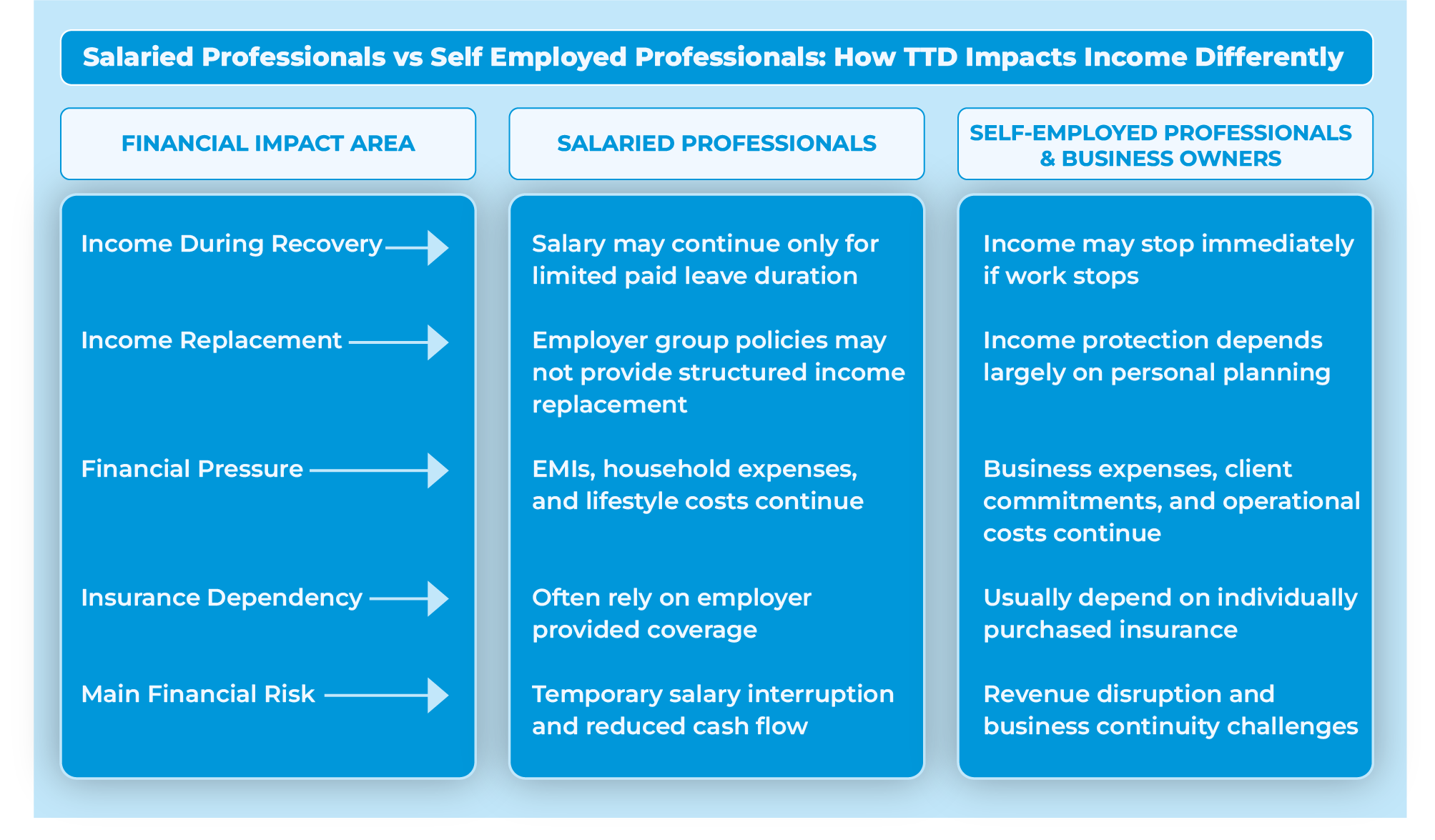
Salaried Professionals vs Self Employed Professionals: How TTD Impacts Income Differently
The financial impact of Temporary Total Disablement (TTD) depends heavily on how an individual earns income. While salaried professionals may have limited employer support, self-employed professionals often face an immediate interruption in cash flow.
What to Check Before Buying a TTD Cover
When evaluating a temporary disability claim in personal accident insurance, pay attention to:
Weekly Compensation Structure
Check whether the payout is fixed or percentage based.
Maximum Benefit Duration
Some policies cap benefits at a limited number of weeks.
Waiting Periods
Certain benefits begin only after a minimum disability duration.
Occupation Definitions
Some insurers classify risks differently for corporate employees and high-risk professions.
Exclusions
Policies may exclude:
- Self-inflicted injuries
- Alcohol related incidents
- Hazardous activities
- Pre-existing conditions in some cases
Additional Benefits
Some personal accident covers may also include additional benefits such as coma cover, fracture benefits, and burns cover.
For example, if an accident directly results in a comatose state during the policy period, the insurer may provide a onetime coma benefit linked to the accidental death sum insured.
Certain insurer plans may also offer fractures and burns related benefits with coverage of up to ₹10,00,000 depending on policy structure and insurer terms.
Why Health Insurance Alone Is Not Enough
Health insurance covers hospitalization, but it does not replace lost income.
During recovery, professionals often face:
- Reduced or zero earnings
- Ongoing EMIs and fixed expenses
- Additional rehabilitation and physiotherapy costs
For many, these indirect costs can match or even exceed medical expenses.
This is why combining health insurance, personal accident insurance, and disability benefits is essential to ensure both medical protection and income continuity.
Final Thoughts

An accident does not only create medical expenses. It can disrupt earning ability at the exact moment financial responsibilities remain unchanged.
Understanding Temporary Total Disablement helps professionals stay financially prepared when an accident temporarily disrupts their ability to work.
For working professionals, consultants, and business owners, the real value of accidental injury insurance is financial continuity when regular income is interrupted.
If your current accident cover is linked only to employer or bank provided insurance, it may be worth reviewing whether it actually protects your income during recovery.
Harmoney Finserv helps professionals and business owners evaluate financial protection gaps beyond standard insurance products.
FAQs
1. What happens if you cannot work after an accident?If the injury causes Temporary Total Disablement, some insurance policies provide weekly compensation benefits during the recovery period.
2. What is Temporary Total Disablement meaning in insurance?It refers to a temporary condition where an insured person cannot perform their job due to accidental injury but is expected to recover.
3. Does health insurance cover loss of income after accident?No. Health insurance mainly covers hospitalization expenses. Income replacement usually requires personal accident or disability insurance.
4. What is weekly compensation benefit in accident insurance?It is a fixed or percentage-based payout provided during temporary disability caused by an accident.
5. Is personal accident insurance useful for salaried employees?Yes. Employer provided coverage may not fully protect against long recovery periods or income interruption.
6. Can self-employed professionals claim TTD benefits?Yes, provided the policy includes Temporary Total Disablement coverage and the claim meets policy conditions.